Wellness Retreats That Don't Feel Like Spas
Wellness trips designed around place, not program — how I build slow, restorative travel that draws on local practice rather than resort packages.
The word "wellness" has done a lot of damage to a real idea. It got attached to resort packages, spa menus, branded detox programs, and five-star properties with infrared saunas and a juice bar named something quiet and tasteful. None of that is wrong, exactly. Some of it is lovely. But wellness retreats that don't feel like spas — trips that restore you through place and local practice rather than through a program someone designed for everyone — are a different thing, and they're what I spend most of my time building when a traveler comes to me tired.
The traveler I'm describing has usually tried the resort version. They came home rested in a surface way and a little hollow underneath. The treatments were good. The food was beautiful and forgettable. The schedule was handled. But the trip didn't locate them anywhere specific — it could have been in any country, at any latitude, and the effect would have been roughly the same. They want something that couldn't have happened somewhere else.
That's the brief I design for.
What "place-rooted wellness" actually means
There's a specific quality I'm looking for when I build a wellness-oriented trip, and it's easier to say what it's not than what it is. It's not a treatment menu. It's not morning classes in a studio that could be anywhere. It's not a program with a theme — "cleanse," "reset," "renew" — that a marketing team wrote and a hospitality company delivered.
What I'm looking for is a practice that exists in the place because local people do it — not because visitors have been invited to. A hammam in a Marrakech medina isn't on the wellness menu; it's an institution the neighborhood has used for generations. A thermal town in the Austrian or Swiss Alps isn't a spa destination; the springs exist because they've always existed, and the town built itself around them. A fishing village in coastal Portugal where the market runs at dawn and the day's rhythm follows the catch — that's a pace you absorb rather than schedule.
These things become wellness travel not because they're labeled that way but because slowing down to be present for them is what produces the restoration. The hammam hour, the morning soak, the quiet market walk — none of them require advance booking or a PDF itinerary. They require being in the right place and having enough time.
My job is to find those places and protect the time.
Why wellness retreats that don't feel like spas work differently
I don't have anything against resort wellness. There are properties I'd recommend without hesitation — small, serious ones where the program has been shaped by a specific place and the setting earns its price. But the resort model as a default for restorative travel has a structural problem: it removes you from the place to put you inside a managed environment, and the managed environment is designed to feel the same regardless of where you are.
The paradox is that the more complete the resort experience, the less located you feel. You could close your eyes in the treatment room and not know what country you were in. The food is international and carefully plated. The schedule is handled. The experience is smooth. But smooth is not the same as restoring. For some travelers, it's close enough. For the ones I plan for most often, the smoothness is part of what leaves them feeling like something was missing.
The alternative isn't roughness or inconvenience. It's specificity. A stay in a place that has character. Meals that use the local fish, the local grain, the local spice — not because they're on a "regional menu" but because that's what's here. A walk through a neighborhood that's been here longer than the tourism infrastructure. A morning with no plan that the destination makes easy to fill without effort.
St. John as a model for this kind of trip
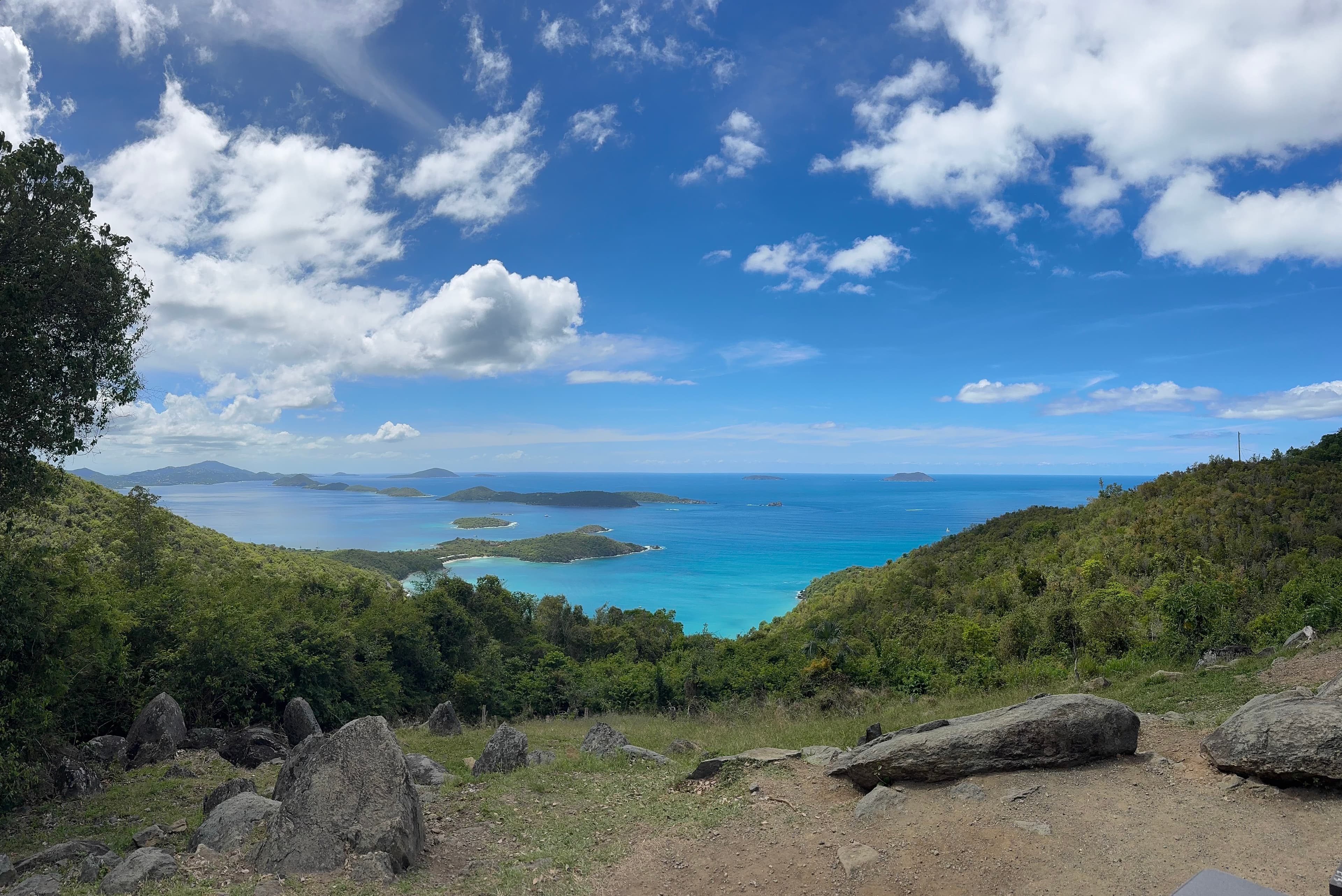
When I design a place-rooted wellness trip and want a clear model to point to, St. John in the USVI is one I come back to often. It's a small island inside a national park — most of the land is protected — and the pace is built into the geography rather than engineered by a hotel. Cruz Bay is walkable. The beaches are a short drive and quieter than almost anywhere you'd reach by plane. The water is warm and clear and forgiving.
What makes St. John work as a wellness destination is less about what's there and more about what isn't. There's no overcrowded resort strip. There's no pressure to cross things off a list. A morning at Francis Bay — turtles offshore, shallow water, quiet sand entry — doesn't need to be followed by anything in particular. Maho in the afternoon, watching turtles graze in the shallows, is its own sufficient hour. The rhythm of the island is: water, food, slow, repeat. That rhythm is the practice.
I've built longer stays around this model in other contexts. A week in a small thermal town in the Alps, where the day starts with a soak in a public spring and the afternoon is a walk through a valley that's been farmed the same way for five hundred years. A slow stay in a Portuguese coastal town where the fish market happens before most people are awake and the rest of the day expands from there. A stay in a riad on a quiet medina lane, with a hammam visit midweek and long afternoons on a rooftop terrace doing nothing in particular.
The through-line: a slow, specific place. Local practice as the anchor. Time protected around it.
How I design one of these trips
The planning for a wellness-focused trip is different from the planning for an itinerary-heavy one, and the difference is mostly in what I leave out.
A standard trip design starts from activities and builds inward — what's worth doing, in what order, with what transitions. A wellness trip design starts from pace and builds outward. I name the rhythm first: how many slow days, how many moderate days, whether there's even an active day at all. Then I find the destination that supports that rhythm naturally. Then I find the accommodation — usually a property with outdoor private space, a terrace or a garden or a pool that's yours, not shared with forty other guests. Then I choose the few things worth doing, and I leave the rest open on purpose.
The "rest blocks" in a wellness itinerary are not gaps. They're content. I name them explicitly in the deliverable: Tuesday morning is open. Sleep, swim, walk to the market if you want to. Nothing is scheduled before noon. That kind of clarity is the planning doing its job — the traveler arrives already knowing what the trip holds and doesn't spend energy renegotiating it in real time.
The one or two local-practice moments I include are specific and grounded. They're not treatments you could find at home — they're reasons to be in this particular place. A visit to a neighborhood hammam if we're in Morocco. A morning at a public thermal bath in Central Europe. A guided walk with a farmer in a region where that's genuinely how people spend time. These anchor the trip in place and give it something to carry home that isn't in a bag.
For the accommodation, I'm looking for a few things: quiet, outdoor space, a stay with some character to it. Not a chain property. Not a resort with a hundred rooms. A twelve-room guesthouse with a garden, a renovated farmhouse, a riad with a courtyard. The stay itself should feel like part of the practice.
Where this sits in the planning process
Wellness-focused trips of this kind most naturally fit the Core tier — long enough to settle in, specific enough to need a full deliverable. A five-to-ten-day stay with intentional sequencing, local-practice moments, and accommodation chosen for quiet is a Core build. The deliverable includes the full trip dashboard with rhythm clearly named, which matters a lot for this kind of trip: the traveler needs to arrive knowing which mornings are fully open and which have one thing gently placed in them.
If you've been thinking about a solo version of this — going somewhere quiet, alone, for the kind of rest that a group trip can't provide — the solo travel when you want quiet, not adventure post covers the overlap between solo and wellness design in detail. And if pacing and sequencing for a longer trip is what you're thinking about, planning a honeymoon without the hype has the clearest explanation of how I think about rhythm and day-sequencing in a multi-day itinerary, even if the brief there is different.
For the slow-travel, place-specific angle, the Lisbon slow travel guide for Alfama is a concrete example of what a quiet single-destination week looks like when the destination earns it.
The starting point for any of this is the intake form. One of the questions asks what you most want to feel by the end of the trip. "Rested" is a complete answer. So is "like I was actually somewhere." That's the brief.
A few common questions.
A retreat is a program. It has a daily schedule — morning breathwork, afternoon treatment, group dinner — and you either fit into it or you don't. A slow wellness trip is a place and a pace. The restoration comes from genuine unhurried days, local food, a few meaningful practices, and the absence of pressure to perform recovery. Both can work. But many people who think they want a retreat find, once they're there, that the structure is its own kind of stress. If you've been in back-to-back meetings for six months, being handed a tight daily program at 7 AM isn't always rest. I design for the other version: shape without schedule, texture without agenda.
More from the journal.
 Trip type
Solo Travel When You Want Quiet, Not Adventure
Solo travel doesn't have to mean adventure. Here's how I plan trips for people going alone who want unhurried days, real quiet, and places that feel easy for a party of one.
Trisha Bush8 min readSolo TravelersWellness Travelers Trip type
Planning a Honeymoon Without the Hype
Planning a honeymoon for two voices, not one — how I design milestone trips that skip the wedding template and let both partners come home with a different favorite hour.
Trisha Bush15 min readCouples & HoneymoonersIntentional Traveler Destinations
The Greek Islands Without the Cruise Port
How I design a Greek Islands trip that never touches a cruise port — smaller islands, ferry rhythms, and the specific logic that keeps the crowds behind you.
Trisha Bush9 min readIntentional Traveler
Want yours designed?
Three minutes of intake. A real reply within a day or two. A trip designed by hand.